
Underground Infrastructure Installed Without Damaging Existing Systems
Utility Trenching in Burbank and throughout the Tri-Cities for properties installing water lines, sewer systems, drainage infrastructure, or electrical conduit below grade
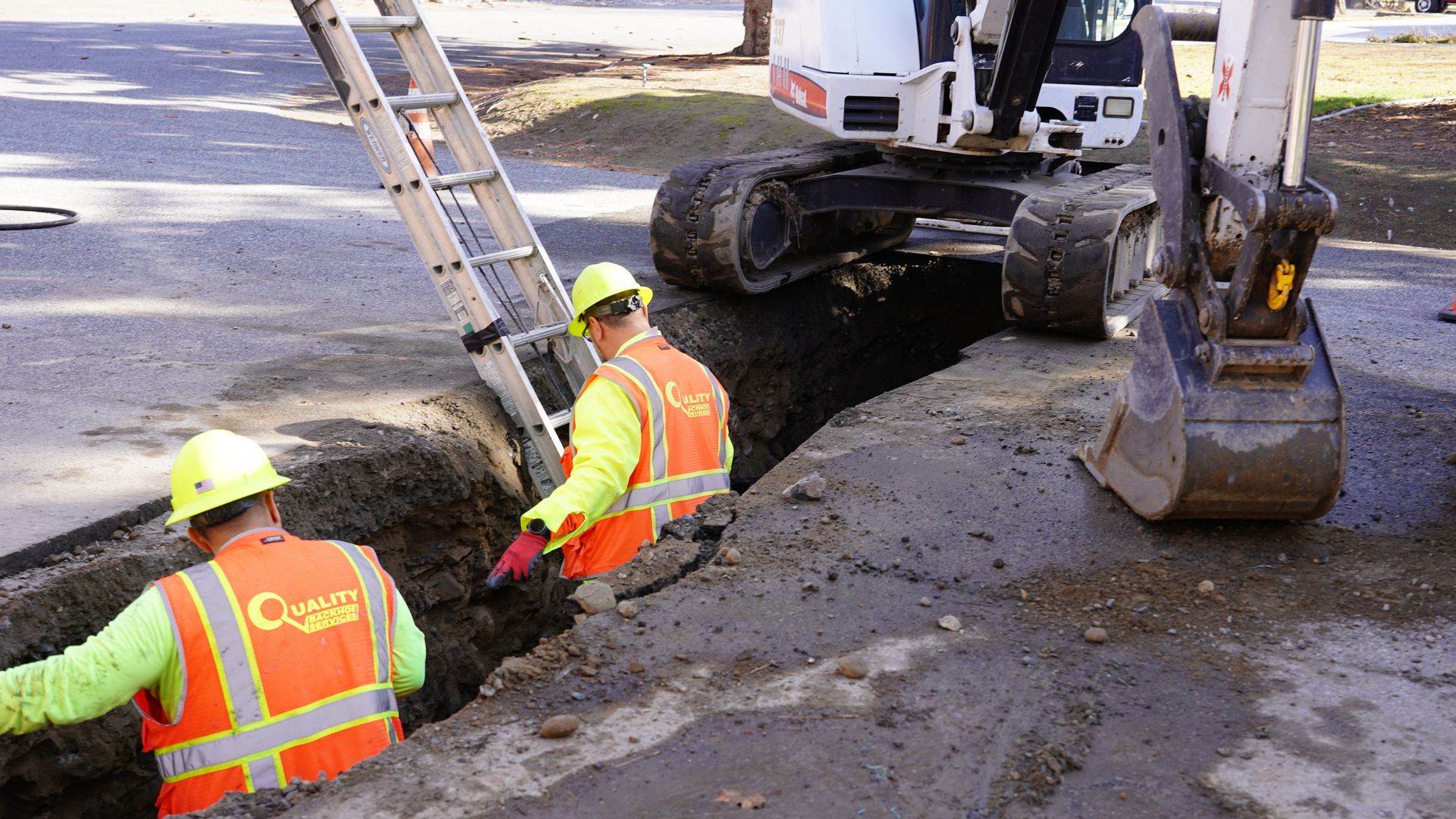
Underground utilities require trenches excavated to specific depths and widths, with accurate horizontal alignment and protection for nearby infrastructure that already occupies the subsurface. Trenching work for water, sewer, drainage, and electrical systems involves more than simply digging a ditch—depth must account for frost protection and code requirements, trench walls must remain stable during pipe installation, and existing utilities must be located and preserved throughout excavation. Quality Backhoe Services, Inc provides utility trenching across the Tri-Cities for residential and commercial projects where precision matters as much as efficiency.
The process begins with utility location to identify existing lines, followed by excavation that maintains trench dimensions required by the system being installed, whether that involves sewer lines needing consistent fall rates or water service requiring specific cover depth. Equipment selection depends on trench depth, soil conditions, and proximity to structures or landscaping that must remain undisturbed during the work.
Arrange a consultation to review your utility installation project and discuss trenching requirements based on system type and site conditions.
Why Precise Excavation Protects Project Success
Utility trenching requires measuring depths relative to finish grade elevations, maintaining consistent trench width to allow proper pipe bedding and backfill compaction, and excavating along planned routes without deviating into areas that would conflict with structures, driveways, or existing utilities. Trenches for sewer lines follow grades calculated to maintain flow velocity, while water service trenches maintain depth below frost penetration levels to prevent winter freeze damage.
After trenching and utility installation are complete, you will see systems that function as designed because trench depth and alignment were controlled throughout excavation rather than corrected later with shims or grade adjustments. Water lines remain below frost depth across their entire run, sewer lines maintain positive drainage without low spots where solids accumulate, and electrical conduit occupies trenches deep enough to meet code requirements for burial depth and physical protection.
Proper trenching also minimizes restoration work after backfilling, since trench width is limited to what the installation requires rather than excavated wider than necessary, reducing the volume of disturbed soil that must be compacted and the surface area requiring landscape or pavement repair after utilities are in place.
Common Questions About This Service
Utility trenching raises practical concerns about depth requirements, site restoration, and coordination with other project phases.
How deep do utility trenches need to be in Burbank and throughout the Tri-Cities?
Water service lines are typically buried at least 36 inches below finish grade to remain below frost depth, sewer lines are installed at depths determined by the elevation of the connection point and required fall rate, and electrical conduit depth varies based on voltage and conduit type but generally requires at least 18 to 24 inches of cover.
What happens to soil removed during trenching?
Excavated material is typically stockpiled adjacent to the trench for use as backfill after pipe installation, though unsuitable material such as large rocks or saturated clay may be removed and replaced with compactable fill to support proper pipe bedding.
How are existing utilities protected during new trench excavation?
Underground utility locations are identified through locating services before excavation begins, and trenches are routed to avoid conflicts when possible or are hand-dug near existing lines when crossings cannot be avoided.
What affects trench wall stability during excavation?
Soil type, moisture content, and trench depth all influence whether trench walls remain stable or require shoring, with sandy or saturated soils more prone to collapse than cohesive clay materials.
Why does backfill compaction matter after pipes are installed?
Uncompacted backfill settles over time, causing surface depressions above the trench line and potentially allowing pipes to shift or sag if bedding material beneath them consolidates unevenly.
Quality Backhoe Services, Inc coordinates trenching work with your utility installation schedule and site-specific requirements. Schedule a project review to discuss trench routing, depth specifications, and any site conditions that affect excavation methods.