Foundations Built on Properly Contoured Ground
Grading and Site Preparation in Burbank and throughout the Tri-Cities for properties where water pools after storms or where foundation work requires precise elevation control
Quality Backhoe Services, Inc handles grading and site preparation across Burbank and the surrounding Tri-Cities area, addressing drainage failures and establishing stable building surfaces before construction begins. When water collects against foundations or drains toward structures instead of away from them, the ground slope is working against the property rather than protecting it. Proper site contouring redirects runoff before it becomes a chronic problem, and leveling work establishes the elevation benchmarks that determine whether a foundation performs correctly over decades of seasonal freeze-thaw cycles.
Site preparation involves removing inconsistent fill material, establishing drainage grades that move water at least ten feet away from structures, and compacting subgrade layers so settlement does not alter the intended slope over time. The work includes contouring for driveways, building pads, road beds, and commercial yards where stormwater management directly affects site usability. Precision grading equipment allows for elevation control within inches across large areas, which matters when foundation forms need level reference points or when drainage swales must maintain specific fall rates to function during heavy runoff events.
Schedule a site evaluation to identify existing drainage patterns and discuss grading requirements for your planned construction project.
What Proper Site Grading Prevents Long-Term
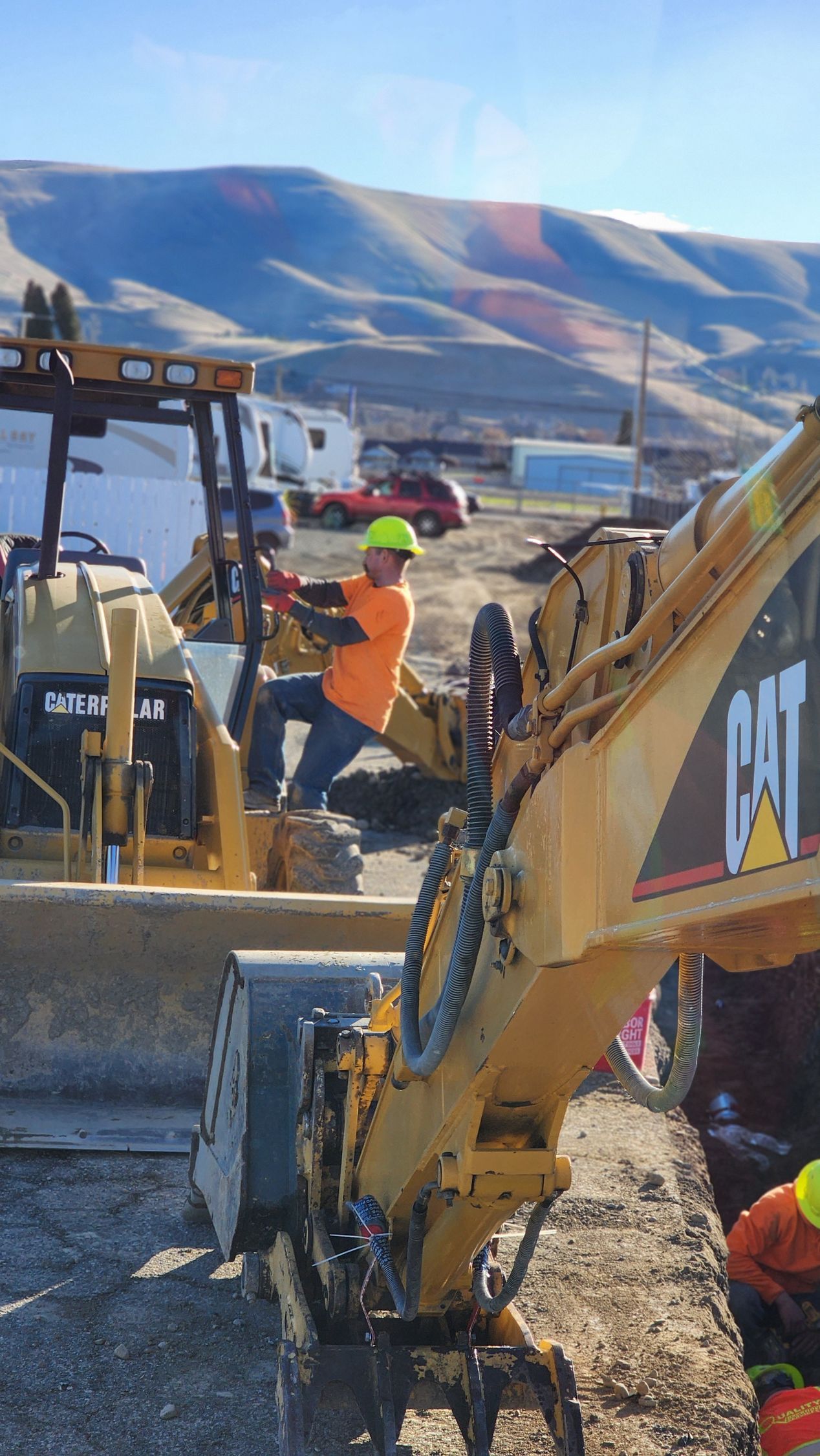
Site preparation begins with surveying existing elevations and mapping where water currently flows during rain events, then determining cut and fill zones that will establish positive drainage away from all structures and paved surfaces. Equipment removes unstable topsoil layers, reshapes subgrade to design elevations, and compacts material in lifts to prevent future settling that would compromise drainage function.
After grading is complete, you will see water moving predictably away from buildings during storms rather than pooling near foundations or flowing toward entry points. Driveways no longer collect standing water in low spots, and building pads remain level across their entire footprint, which prevents differential settlement that can crack slabs or shift framing. The work eliminates the chronic moisture problems that lead to foundation deterioration, frost heave damage, and saturated crawl spaces that compromise structural wood over time.
Grading work also establishes reference elevations for utility trenches, so sewer lines maintain proper fall and water service lines remain below frost depth throughout their horizontal run. Sites prepared with accurate contour work require fewer corrections during construction and support stable long-term performance for all improvements built on the finished grade.
What Property Owners Usually Ask
Grading projects raise practical questions about timing, site conditions, and what the process involves from clearing to final compaction.
What happens to existing topsoil during site preparation?
Topsoil is stripped and stockpiled separately from subgrade material so it can be redistributed after grading is complete, preserving organic material for landscaping areas while exposing stable subgrade for construction zones.
How does grading address drainage problems that affect multiple properties?
Site work establishes grades that direct water to approved drainage pathways such as swales, culverts, or detention areas, coordinating with adjacent property elevations to prevent runoff from migrating onto neighboring land.
What determines whether a site needs cut or fill to reach target elevations?
Existing ground elevations are compared to design grades, and the difference determines whether material must be excavated and removed or imported and compacted to achieve proper drainage slopes and building pad heights.
Why does compaction matter after grading is finished?
Uncompacted fill settles unevenly over time, altering drainage slopes and causing foundations or pavement to crack as the ground beneath them shifts, so material is compacted in controlled lifts to achieve stable density before construction proceeds.
When should grading be scheduled for projects in the Tri-Cities?
Grading work is best completed during dry months when soil moisture content allows for effective compaction, though projects can proceed year-round with adjustments to material handling and compaction methods based on weather conditions.
Quality Backhoe Services, Inc coordinates grading work with your construction timeline and site-specific drainage requirements. Request a project consultation to review site conditions and discuss preparation needs for your planned development.